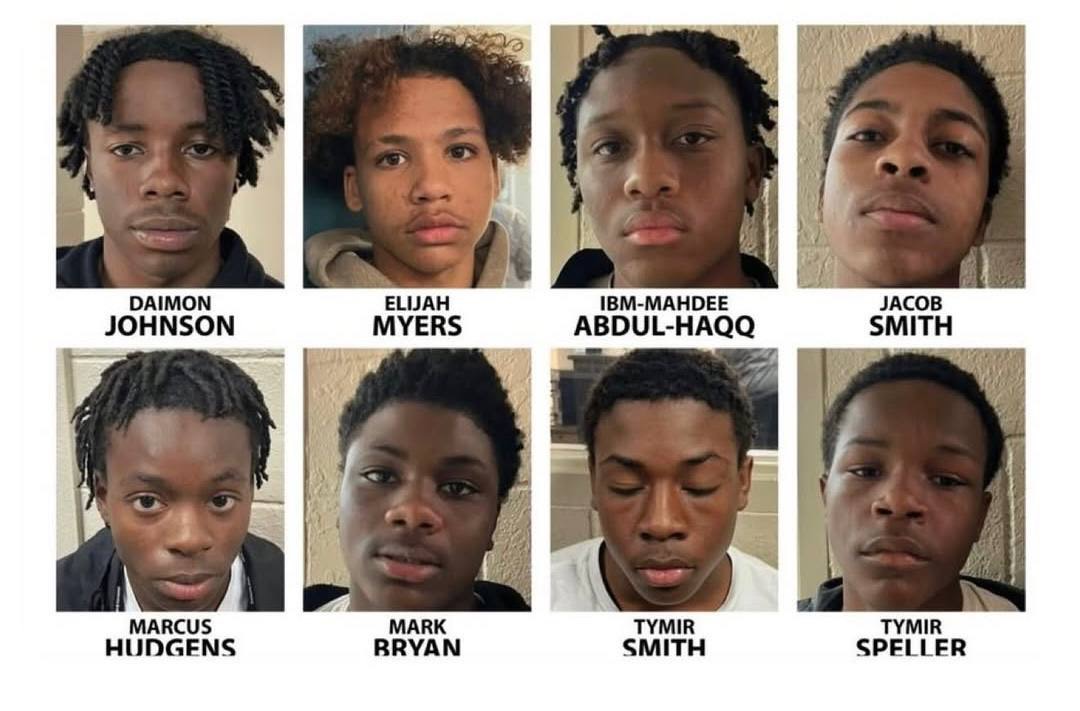
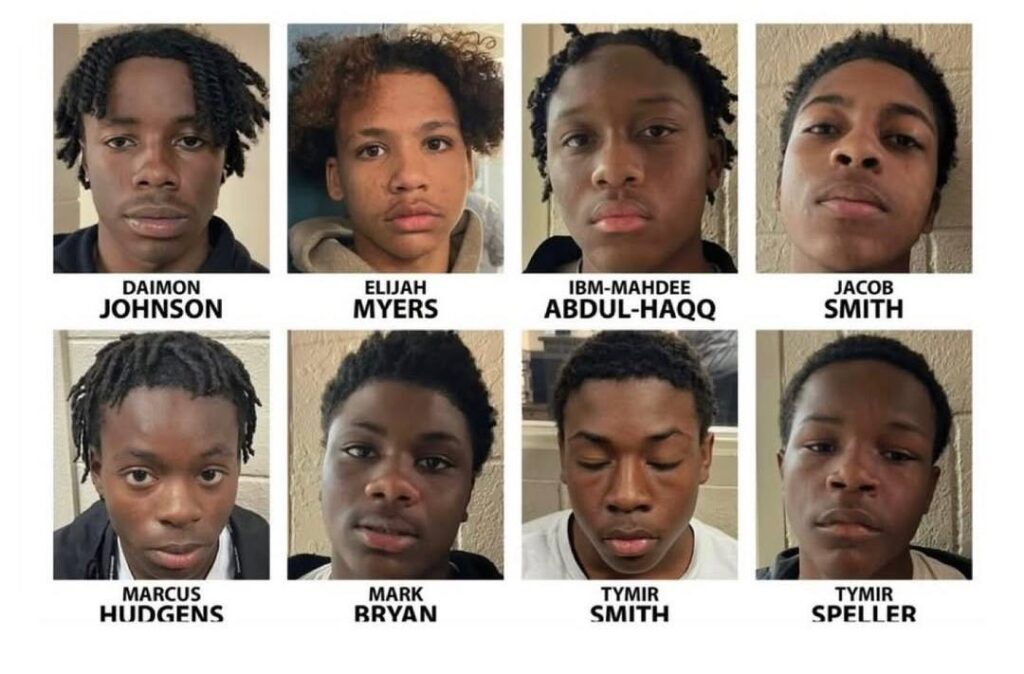
A national youth-football championship ended in chaos — not on the field, but inside a retail store. On Saturday, December 6, eight teenage players from Philadelphia’s traveling team United Thoroughbreds were arrested at a Dick’s Sporting Goods in Davenport, Florida — accused of coordinating a theft just hours before their scheduled championship game.
⸻
The Heist: How It Unfolded
According to a press release from the Polk County Sheriff’s Office (PCSO), deputies responded around 10:55 a.m. after store management flagged suspicious behavior. The group — all boys aged between 14 and 15 — were in Florida to participate in the Prolifix Nationals youth football tournament and had a championship game scheduled for later that day.
Surveillance footage shows the youths entered the store separately in two “waves.” The first trio browsed the aisles, while the second group entered moments later. One teen reportedly purchased a small item at the register — presumably to obtain a legitimate store bag. He then regrouped with the others, and the team began stuffing the bag (and a separate backpack) with high-value merchandise.
As three of the teens attempted to exit past all points of sale, deputies were waiting — and moved in to detain them. The remaining five were taken into custody inside the store.
When dust settled, the total value of stolen goods was estimated at $2,296.07. Items reportedly included athletic apparel and football gear — not small sneakers, but multiple high-demand products.
⸻
The Fallout: No Game, Felony Charges, and Disappointment
The eight youths were identified by name: Daimon Johnson (15), Mark Bryan (15), Ibn Mahdee Abdul Haqq (14), Elijah Myers (14), Tymir Speller (15), Marcus Hudgens (15), Tymir Smith (14), and Jacob Scott (15). According to PCSO, none had prior criminal records.
Charges filed against them include felony retail theft (for theft over $750) and felony conspiracy to commit retail theft. Given their arrests, the players were rendered ineligible to participate in the championship game that evening. Their teammates, coaches, and families received immediate notifications. The team subsequently forfeited the match — a crushing blow for many who had traveled long distances for the tournament.
Law enforcement did not mince words. As noted by Sheriff Grady Judd, “These juveniles were not from Polk County — they came here from out of state for a football tournament, and instead of representing their team with pride, they chose to commit a crime.”
⸻
Bigger Than a Theft: Reputation, Consequences, and Lessons
The repercussions of this incident extend far beyond the missing championship. For the young athletes involved — some just 14 years old — a felony charge could carry serious long-term consequences: impacting educational opportunities, college athletic recruitment, and their personal records.
For their teammates and fellow youth in the sport, the fallout may sow distrust: not only among coaches and organizers, but among host cities and tournament systems that expect visiting teams to uphold sportsmanship and integrity. The reputation of the United Thoroughbreds — and perhaps even Philadelphia youth football more broadly — may suffer damage.
Parents, coaches, and league officials now face tough questions: were there breakdowns in supervision, accountability, or messaging? What safeguards existed to prevent youthful misbehavior — and what oversight failed?
For many observers, the message is clear: youthful privilege — being part of a traveling sports team — is no shield against legal consequences when one crosses the line. As Sheriff Judd emphasized, “It doesn’t matter if you’re from here or visiting — if you break the law … you will be arrested and held accountable.”
⸻
Voices: Shock, Disappointment — and Frustration
Community reaction has been swift and harsh.
Commenters on social media and forums criticized the players for letting down their teammates, coaches, and families. One user on Reddit wrote:
“Stealing mindset of Philadelphia teens.”
Another added what many likely feel:
“Because of the arrests, the teens were unable to participate in their scheduled championship game, and their team lost the game.”
Though juvenile justice authorities noted the boys had no prior records, the sense of betrayal runs deep — especially among those who invested time, effort, and money into supporting the team’s championship aspirations.
⸻
What’s Next: Accountability, Legal Process, and Reflection
As of now, the eight youths remain in custody at a juvenile assessment center in Florida, facing felony charges. Under Florida law, these records are public and could impact their futures significantly.
Legal proceedings will follow. The boys’ defense – perhaps via family or legal guardians — may argue for leniency given their ages and lack of prior offenses. But prosecutors may push to make an example of them, given the coordinated nature of the theft and the premeditation evident in the surveillance footage.
Meanwhile, stakeholders in youth sports — coaches, parents, organizers — may need to reevaluate how they vet behavior, supervise athletes on trips, and instill accountability. The incident is a cautionary tale: talent and teamwork matter, but character and integrity are non-negotiable.
⸻
In the Spotlight: When Youth Sports & Crime Collide
This isn’t the first time that youth sports have intersected with allegations of crime — but seldom has the timing been so cruel: a championship game on the horizon, and a tournament in full swing. The drama didn’t unfold on the gridiron — it played out under store lights, surveillance cameras, and the harsh glare of handcuffs.
For the boys of the United Thoroughbreds, this moment may haunt them for years. For their teammates, families, and coaches, it’s a painful lesson — one that may prompt reflection, legal consequences, and changes in how traveling youth teams operate.
For the broader community, the message is unmistakable: being part of a team does not grant impunity. The path to championships — on or off the field — depends on respect, responsibility, and, above all, making the right choices.