Category: Uncategorized

  • “A Soldier’s (Vietnam Veteran) Final Battle : Surviving the Cold”

    “A Soldier’s (Vietnam Veteran) Final Battle : Surviving the Cold”

    On a bitter, freezing night, the hum of dryers was the only warmth Elijah had. At 88 years old, the Vietnam veteran had nowhere else to go. His frail body leaned against the machines, his clothes tattered and full of holes, exhaustion etched into every line of his weathered face.

    For Elijah, the 24-hour laundromat wasn’t comfort—it was survival. But to a customer, his presence was unsettling. A call was made: “There’s a vagrant loitering by the dryers.”

    Deputy Carter arrived, prepared for routine. Trespassing calls were nothing new. He expected to move along another transient, just as he had countless times before.

    Then he saw the hat.
    “Vietnam Veteran.”

    Carter stopped. He didn’t tower over Elijah. He didn’t bark orders. Instead, he lowered himself to the dirty linoleum floor, sitting shoulder-to-shoulder with the old man.

    “It’s warm here, sir,” Carter said softly, nodding toward the dryer.

    Elijah’s eyes flickered with fear. He expected handcuffs, a cold night on the street. Instead, he whispered:
    “It’s the only warm place I got. Been to a lot of beds, officer. None felt like home.”

    Carter’s heart broke. He thought of the sacrifices Elijah had made decades ago, of the battles fought and the loyalty sworn. This wasn’t a suspect—it was a soldier, a superior officer in spirit.

    “We can get you to a place even warmer,” Carter promised. “Not just a cot in a gym. A real room. For veterans.”

    For twenty minutes, Carter stayed on that floor, listening. No badge, no authority—just a man honoring another. When Elijah finally felt safe enough to stand, they walked out together. Not to the backseat of a squad car, but toward a warm meal and a bed that felt, at last, like home.

  • Texas Officer Shot at Point-Blank Range at Gas Station


    Shocking video footage has been released by police of the moment a traffic stop in Texas unexpectedly turned into a three-man gunfight between two police officers and a suspect.

    One officer was shot at close range as gunfire suddenly broke out during what had appeared to be until then been a good-natured exchange with suspect Jimmy Bryan, 23, on a highway in Houston.

    Footage was released by police this week of the shootout that took place at about 11:20 a.m. local time on Wednesday, May 4, in a gas station in the 14800 block of the Gulf Freeway, which is part of the South Interstate Highway 45. The footage can be seen.

    Various camera angles show how the shooting unfolded through footage from the Houston Police Department (HPD) officers’ body-worn cameras and the dash-cam footage from their vehicle. Officer J. Sallee and his partner, Officer M. McMurtry, are seen approaching the suspect’s vehicle after making the traffic stop.

    McMurtry walks up to the driver who appears relaxed with an arm hanging out of the window. “What’s up, brother?” the officer says, and chuckles as he points out the car is not yet in park. He asks about the vehicle then says, “You got your driver’s license on you, buddy?” As the suspect looks around his car, supposedly for his license, and checks his phone, the officer asks: “You got any weapons on you, brother?” The suspect shakes his head and replies: “No, sir.” The officer notes the suspect is wearing an ankle monitor and repeats his request for his ID. But the suspect is unable to provide any, and McMurtry says, “Here, why don’t you do me a favor and take off your seatbelt and step out.”

    The suspect does not make a move, and the officer asks if he’d heard him. He replies: “Are you requesting me, or…?” The officer says he is now “telling” him. But as the suspect opens his door, he opens fire, hitting McMurtry’s partner, Sallee, who had just walked around the front of the vehicle to join his colleague. Sallee falls to the ground but was able to grab his gun and begin shooting, while McMurtry has also begun shooting at the suspect, who was also firing. McMurtry runs around the car, reloading his gun as he does so, and Sallee begins to shout: “I’m hit!” McMurtry shouts: “Partner! Are you good?” Sallee screams again that he’s been hit, and McMurtry shouts “Goddammit!” As McMurtry comes around the front of the vehicle, both Sallee and the suspect can be seen lying on the ground and McMurtry throws the suspect’s weapon away from them all.

    Sallee shouts out that he’s been hit in the femur, as more officers arrive at the scene. One calls for a tourniquet and another says to load him into their truck as Sallee tells them: “I’m bleeding a lot.”

    Officer J. Sallee was shot in the lower pelvic area and was rushed to Memorial Hermann Southeast Hospital in a stable condition, HPD said. His partner, Officer M. McMurtry, was uninjured. Both men, who are assigned to the Traffic Enforcement Division, joined the HPD in June 2012.

    HPD Chief Troy Finner told local news channel KPRC 2 that Sallee is expected to make a full recovery and added: “Thank God for his ballistic vest and flashlight, which may have saved his life.”

  • A Little Girl’s Cry That Changed Everything How One Moment Exposed Judgement Fear and an Unbreakable Bond

    My daughter’s scream cut through the noise of the county fair like a siren, sharp enough to stop every heartbeat in its path. “That’s my grandpa!” she cried, her tiny fists pounding against the arms of the police officers who were pinning my father to the ground. A five-year-old in a pink fairy dress fighting grown men because someone decided a leather vest and long gray hair were signs of a criminal. It was a moment that would fracture our family’s sense of safety, expose the cruelty of assumptions, and reveal the fierce loyalty between a grandfather and the little girl who adores him.

    I wasn’t there that day. I was recovering from surgery, trusting my dad—my gentle, sixty-seven-year-old Vietnam veteran father—to give my daughter Lily a perfect day at the fair. He bought her the fairy dress she wore. He planned the outing around everything she loved most. He bent down to tie her shoe, brushing cotton candy from her wings, when officers rushed in, yanked him backward, and slammed him onto the asphalt. They didn’t ask questions. They didn’t speak to Lily. They didn’t even pause long enough to see her holding his hand moments before. They saw a “dirty old biker,” just like the woman who called 911 reported. They saw a threat instead of a grandfather.

    The damage they caused went deeper than scraped skin and a twisted knee. My father—who had built half the buildings in our town, who had never harmed anyone, whose hands had only ever lifted children, tools, and love—felt humiliated, broken, and suddenly dangerous simply for existing beside his granddaughter. He stopped visiting Lily afterward, convinced that his presence put her at risk. And Lily… she waited by the window every day for the rumble of his motorcycle that no longer came, asking through tears if she had done something wrong. Watching them both hurt was like watching the world tilt off its axis.

    But healing began in unexpected ways. A conversation with the woman who made the call, who had judged my father entirely by appearance. A nationwide outpouring of support once the video went viral. Veterans, bikers, parents—all reminding Dad of his worth, his goodness, his humanity. Eventually, he returned to Lily. She ran into his arms with a warrior’s fury and a child’s relief, promising to fight anyone who ever hurt him again. The county issued a formal apology. The officers received bias training. And Dad reclaimed his space in Lily’s life, wearing his leather vest proudly as he walked her into kindergarten. People still stare sometimes, but Lily always sets them straight: “That’s my grandpa. He’s a hero.” And in the end, that truth—spoken boldly by a five-year-old warrior princess—is the one that matters most.

  • ‼️🚨😱Texas Officer Shot at Point-Blank Range at Gas Station


    Shocking video footage has been released by police of the moment a traffic stop in Texas unexpectedly turned into a three-man gunfight between two police officers and a suspect.

    One officer was shot at close range as gunfire suddenly broke out during what had appeared to be until then been a good-natured exchange with suspect Jimmy Bryan, 23, on a highway in Houston.

    Footage was released by police this week of the shootout that took place at about 11:20 a.m. local time on Wednesday, May 4, in a gas station in the 14800 block of the Gulf Freeway, which is part of the South Interstate Highway 45. The footage can be seen.

    Various camera angles show how the shooting unfolded through footage from the Houston Police Department (HPD) officers’ body-worn cameras and the dash-cam footage from their vehicle. Officer J. Sallee and his partner, Officer M. McMurtry, are seen approaching the suspect’s vehicle after making the traffic stop.

    McMurtry walks up to the driver who appears relaxed with an arm hanging out of the window. “What’s up, brother?” the officer says, and chuckles as he points out the car is not yet in park. He asks about the vehicle then says, “You got your driver’s license on you, buddy?” As the suspect looks around his car, supposedly for his license, and checks his phone, the officer asks: “You got any weapons on you, brother?” The suspect shakes his head and replies: “No, sir.” The officer notes the suspect is wearing an ankle monitor and repeats his request for his ID. But the suspect is unable to provide any, and McMurtry says, “Here, why don’t you do me a favor and take off your seatbelt and step out.”

    The suspect does not make a move, and the officer asks if he’d heard him. He replies: “Are you requesting me, or…?” The officer says he is now “telling” him. But as the suspect opens his door, he opens fire, hitting McMurtry’s partner, Sallee, who had just walked around the front of the vehicle to join his colleague. Sallee falls to the ground but was able to grab his gun and begin shooting, while McMurtry has also begun shooting at the suspect, who was also firing. McMurtry runs around the car, reloading his gun as he does so, and Sallee begins to shout: “I’m hit!” McMurtry shouts: “Partner! Are you good?” Sallee screams again that he’s been hit, and McMurtry shouts “Goddammit!” As McMurtry comes around the front of the vehicle, both Sallee and the suspect can be seen lying on the ground and McMurtry throws the suspect’s weapon away from them all.

    Sallee shouts out that he’s been hit in the femur, as more officers arrive at the scene. One calls for a tourniquet and another says to load him into their truck as Sallee tells them: “I’m bleeding a lot.”

    Officer J. Sallee was shot in the lower pelvic area and was rushed to Memorial Hermann Southeast Hospital in a stable condition, HPD said. His partner, Officer M. McMurtry, was uninjured. Both men, who are assigned to the Traffic Enforcement Division, joined the HPD in June 2012

    HPD Chief Troy Finner told local news channel KPRC 2 that Sallee is expected to make a full recovery and added: “Thank God for his ballistic vest and flashlight, which may have saved his life.”

  • Championship Dreams Derailed: Philadelphia Youth Football Team Arrested Hours Before Big Game

    Championship Dreams Derailed: Philadelphia Youth Football Team Arrested Hours Before Big Game

    A national youth-football championship ended in chaos — not on the field, but inside a retail store. On Saturday, December 6, eight teenage players from Philadelphia’s traveling team United Thoroughbreds were arrested at a Dick’s Sporting Goods in Davenport, Florida — accused of coordinating a theft just hours before their scheduled championship game.

    The Heist: How It Unfolded

    According to a press release from the Polk County Sheriff’s Office (PCSO), deputies responded around 10:55 a.m. after store management flagged suspicious behavior. The group — all boys aged between 14 and 15 — were in Florida to participate in the Prolifix Nationals youth football tournament and had a championship game scheduled for later that day.

    Surveillance footage shows the youths entered the store separately in two “waves.” The first trio browsed the aisles, while the second group entered moments later. One teen reportedly purchased a small item at the register — presumably to obtain a legitimate store bag. He then regrouped with the others, and the team began stuffing the bag (and a separate backpack) with high-value merchandise.

    As three of the teens attempted to exit past all points of sale, deputies were waiting — and moved in to detain them. The remaining five were taken into custody inside the store.

    When dust settled, the total value of stolen goods was estimated at $2,296.07. Items reportedly included athletic apparel and football gear — not small sneakers, but multiple high-demand products.

    The Fallout: No Game, Felony Charges, and Disappointment

    The eight youths were identified by name: Daimon Johnson (15), Mark Bryan (15), Ibn Mahdee Abdul Haqq (14), Elijah Myers (14), Tymir Speller (15), Marcus Hudgens (15), Tymir Smith (14), and Jacob Scott (15). According to PCSO, none had prior criminal records.

    Charges filed against them include felony retail theft (for theft over $750) and felony conspiracy to commit retail theft. Given their arrests, the players were rendered ineligible to participate in the championship game that evening. Their teammates, coaches, and families received immediate notifications. The team subsequently forfeited the match — a crushing blow for many who had traveled long distances for the tournament.

    Law enforcement did not mince words. As noted by Sheriff Grady Judd, “These juveniles were not from Polk County — they came here from out of state for a football tournament, and instead of representing their team with pride, they chose to commit a crime.”

    Bigger Than a Theft: Reputation, Consequences, and Lessons

    The repercussions of this incident extend far beyond the missing championship. For the young athletes involved — some just 14 years old — a felony charge could carry serious long-term consequences: impacting educational opportunities, college athletic recruitment, and their personal records.

    For their teammates and fellow youth in the sport, the fallout may sow distrust: not only among coaches and organizers, but among host cities and tournament systems that expect visiting teams to uphold sportsmanship and integrity. The reputation of the United Thoroughbreds — and perhaps even Philadelphia youth football more broadly — may suffer damage.

    Parents, coaches, and league officials now face tough questions: were there breakdowns in supervision, accountability, or messaging? What safeguards existed to prevent youthful misbehavior — and what oversight failed?

    For many observers, the message is clear: youthful privilege — being part of a traveling sports team — is no shield against legal consequences when one crosses the line. As Sheriff Judd emphasized, “It doesn’t matter if you’re from here or visiting — if you break the law … you will be arrested and held accountable.”

    Voices: Shock, Disappointment — and Frustration

    Community reaction has been swift and harsh.

    Commenters on social media and forums criticized the players for letting down their teammates, coaches, and families. One user on Reddit wrote:

    “Stealing mindset of Philadelphia teens.”

    Another added what many likely feel:

    “Because of the arrests, the teens were unable to participate in their scheduled championship game, and their team lost the game.”

    Though juvenile justice authorities noted the boys had no prior records, the sense of betrayal runs deep — especially among those who invested time, effort, and money into supporting the team’s championship aspirations.

    What’s Next: Accountability, Legal Process, and Reflection

    As of now, the eight youths remain in custody at a juvenile assessment center in Florida, facing felony charges. Under Florida law, these records are public and could impact their futures significantly.

    Legal proceedings will follow. The boys’ defense – perhaps via family or legal guardians — may argue for leniency given their ages and lack of prior offenses. But prosecutors may push to make an example of them, given the coordinated nature of the theft and the premeditation evident in the surveillance footage.

    Meanwhile, stakeholders in youth sports — coaches, parents, organizers — may need to reevaluate how they vet behavior, supervise athletes on trips, and instill accountability. The incident is a cautionary tale: talent and teamwork matter, but character and integrity are non-negotiable.

    In the Spotlight: When Youth Sports & Crime Collide

    This isn’t the first time that youth sports have intersected with allegations of crime — but seldom has the timing been so cruel: a championship game on the horizon, and a tournament in full swing. The drama didn’t unfold on the gridiron — it played out under store lights, surveillance cameras, and the harsh glare of handcuffs.

    For the boys of the United Thoroughbreds, this moment may haunt them for years. For their teammates, families, and coaches, it’s a painful lesson — one that may prompt reflection, legal consequences, and changes in how traveling youth teams operate.

    For the broader community, the message is unmistakable: being part of a team does not grant impunity. The path to championships — on or off the field — depends on respect, responsibility, and, above all, making the right choices.

  • Japan struck by tsunami after 7.6 magnitude earthquake

    Japan struck by tsunami after 7.6 magnitude earthquake

    Generated by Ai

    A powerful 7. 6-magnitude earthquake struck late Monday off northern Japan, triggering a tsunami of up to 70 centimeters (27 inches) in Pacific coast communities and warnings of potentially higher surges, the Japanese Meteorological Agency said.

    Several people were injured, media reports said.

    The quake struck at about 11:15 p.m. (1415 GMT) in the Pacific Ocean about 80 kilometers (50 miles) off the coast of Aomori, the northernmost prefecture of Japan’s main Honshu island, the agency said.

    A tsunami of 70 centimeters was measured in Kuji port in Iwate prefecture, just south of Aomori, and tsunami levels of up to 50 centimeters struck other coastal communities in the region, the agency said.

    The agency issued an alert for potential tsunami surges of up to 3 meters (10 feet) in some areas, and Chief Cabinet Secretary Minoru Kihara urged residents to immediately head to higher ground or take shelter inside buildings or evacuation centers until the alert is lifted.

    Several people were injured at a hotel in the Aomori town of Hachinohe and a man in the town of Tohoku was slightly hurt when his car fell into a hole, public broadcaster NHK reported.

    Kihara said nuclear power plants in the region were conducting safety checks and that so far no problems were detected.

    Several cases of fires were reported in Aomori, and about 90,000 residents were advised to take shelter at evacuation centers, the Fire and Disaster Management Agency said.

    Satoshi Kato, a vice principal of a public high school in Hachinohe, told NHK that he was at home when the quake struck, and that glasses and bowls fell and smashed into shards on the floor.

    Kato said he drove to the school because it was designated an evacuation center, and on the way he encountered traffic jams and car accidents as panicked people tried to flee. Nobody had yet come to the school to take shelter, he said.

    Prime Minister Sanae Takaichi, in brief comment to reporters, said the government set up an emergency task force to urgently assess the extent of damage. “We are putting people’s lives first and doing everything we can,” she said.

    The quake struck about 80 kilometers (50 miles) northeast of Hachinohe, and about 50 kilometers (30 miles) below the sea surface, the meteorological agency said.

    It was just north of the Japanese coast that suffered the magnitude 9.0 quake and tsunami in 2011 that killed nearly 20,000 people.

    Source : AL.Com

  • Japan struck by tsunami after 7.6 magnitude earthquake

    Japan struck by tsunami after 7.6 magnitude earthquake

    Generated by Ai

    A powerful 7. 6-magnitude earthquake struck late Monday off northern Japan, triggering a tsunami of up to 70 centimeters (27 inches) in Pacific coast communities and warnings of potentially higher surges, the Japanese Meteorological Agency said.

    Several people were injured, media reports said.

    The quake struck at about 11:15 p.m. (1415 GMT) in the Pacific Ocean about 80 kilometers (50 miles) off the coast of Aomori, the northernmost prefecture of Japan’s main Honshu island, the agency said.

    A tsunami of 70 centimeters was measured in Kuji port in Iwate prefecture, just south of Aomori, and tsunami levels of up to 50 centimeters struck other coastal communities in the region, the agency said.

    The agency issued an alert for potential tsunami surges of up to 3 meters (10 feet) in some areas, and Chief Cabinet Secretary Minoru Kihara urged residents to immediately head to higher ground or take shelter inside buildings or evacuation centers until the alert is lifted.

    Several people were injured at a hotel in the Aomori town of Hachinohe and a man in the town of Tohoku was slightly hurt when his car fell into a hole, public broadcaster NHK reported.

    Kihara said nuclear power plants in the region were conducting safety checks and that so far no problems were detected.

    Several cases of fires were reported in Aomori, and about 90,000 residents were advised to take shelter at evacuation centers, the Fire and Disaster Management Agency said.

    Satoshi Kato, a vice principal of a public high school in Hachinohe, told NHK that he was at home when the quake struck, and that glasses and bowls fell and smashed into shards on the floor.

    Kato said he drove to the school because it was designated an evacuation center, and on the way he encountered traffic jams and car accidents as panicked people tried to flee. Nobody had yet come to the school to take shelter, he said.

    Prime Minister Sanae Takaichi, in brief comment to reporters, said the government set up an emergency task force to urgently assess the extent of damage. “We are putting people’s lives first and doing everything we can,” she said.

    The quake struck about 80 kilometers (50 miles) northeast of Hachinohe, and about 50 kilometers (30 miles) below the sea surface, the meteorological agency said.

    It was just north of the Japanese coast that suffered the magnitude 9.0 quake and tsunami in 2011 that killed nearly 20,000 people.

    Source : AL.Com

  • Teen’s Sentence Increased From 25 Years To Life In Pr*son After Arrogant Courtroom Behavior

    Justice systems around the world are built upon a foundation of fairness, responsibility, and rehabilitation. Every courtroom is a place where human choices meet the letter of the law — and where even small gestures can speak louder than words. One recent case has sparked worldwide discussion, not only for its outcome but also for what it reveals about attitude, accountability, and the meaning of justice.

    What began as an ordinary sentencing hearing soon evolved into a moment that captured global attention. A teenage defendant, initially facing a 25-year prison term, ended up receiving a far harsher outcome — a life sentence — after his demeanor during court proceedings drew the ire of the judge. The event, recorded and shared online, quickly became a viral talking point and raised important ethical and legal questions: Can disrespect influence a sentence? Should behavior in the courtroom carry as much weight as the crime itself?

    This story, now the subject of widespread debate, has become a cautionary example of how attitude and communication can dramatically shape one’s future.

    The Courtroom Setting: A Turning Point for a Young Life

    Courtrooms often carry an air of tension, where every word and action may hold serious consequences.The young defendant, whose identity remains confidential due to age restrictions, appeared before the court to receive his sentencing for a serious offense. After months of legal proceedings, witness testimonies, and deliberations, the judge prepared to announce the decision — a 25-year sentence intended to reflect both justice and the possibility of rehabilitation.

    However, instead of displaying remorse or an understanding of the seriousness of his situation, the teen reacted in a way that surprised many in attendance. Reports describe him as smirking, rolling his eyes, and muttering comments under his breath — gestures that seemed to mock the process.

    Observers noted the judge’s visible frustration as the teen’s demeanor continued. What followed was an unepcted and dramatic shift that changed the course of the young man’s life forever.

  • Teen’s Sentence Increased From 25 Years To Life In Pr*son After Arrogant Courtroom Behavior

    Justice systems around the world are built upon a foundation of fairness, responsibility, and rehabilitation. Every courtroom is a place where human choices meet the letter of the law — and where even small gestures can speak louder than words. One recent case has sparked worldwide discussion, not only for its outcome but also for what it reveals about attitude, accountability, and the meaning of justice.

    What began as an ordinary sentencing hearing soon evolved into a moment that captured global attention. A teenage defendant, initially facing a 25-year prison term, ended up receiving a far harsher outcome — a life sentence — after his demeanor during court proceedings drew the ire of the judge. The event, recorded and shared online, quickly became a viral talking point and raised important ethical and legal questions: Can disrespect influence a sentence? Should behavior in the courtroom carry as much weight as the crime itself?

    This story, now the subject of widespread debate, has become a cautionary example of how attitude and communication can dramatically shape one’s future.


    The Courtroom Setting: A Turning Point for a Young Life


    Courtrooms often carry an air of tension, where every word and action may hold serious consequences. The young defendant, whose identity remains confidential due to age restrictions, appeared before the court to receive his sentencing for a serious offense. After months of legal proceedings, witness testimonies, and deliberations, the judge prepared to announce the decision — a 25-year sentence intended to reflect both justice and the possibility of rehabilitation.


    However, instead of displaying remorse or an understanding of the seriousness of his situation, the teen reacted in a way that surprised many in attendance. Reports describe him as smirking, rolling his eyes, and muttering comments under his breath — gestures that seemed to mock the process.


    Observers noted the judge’s visible frustration as the teen’s demeanor continued. What followed was an unexpected and dramatic shift that changed the course of the young man’s life forever.


    When Words and Actions Speak Louder Than Intentions


    Judges are trained to remain impartial, guided by law rather than emotion. Yet, they are also human beings tasked with maintaining the dignity of the courtroom. Respect — both for the court and for the rule of law — is fundamental to judicial proceedings. When a defendant’s behavior appears to trivialize the process, it can influence how the judge perceives their readiness for rehabilitation.


    In this case, the teen’s apparent indifference was interpreted as a sign of arrogance and a refusal to take responsibility for his actions. The judge paused, then delivered a decision that would reverberate far beyond that courtroom: the 25-year sentence was replaced with life in prison.


    The moment was met with stunned silence. Some observers felt justice had been served; others believed emotion had overtaken fairness. The video of the exchange soon reached millions online, igniting a heated global conversation about justice, attitude, and proportionality in sentencing.


    Public Reaction: A Divided Debate Across the Internet


    Once footage of the event appeared online, social media platforms filled with commentary. Thousands of users expressed strong opinions, with some calling the outcome “a lesson in humility,” while others worried that the punishment did not fit the behavior.


    Supporters of the judge’s decision argued that respect for authority is essential, especially within a court of law. They saw the ruling as an affirmation that actions and words — even nonverbal cues — have consequences. For them, the case served as a reminder to younger generations about the importance of respect, empathy, and accountability.


    Critics of the decision, however, pointed out that sentencing should be based solely on legal principles, not emotional reactions or displays of attitude. They argued that punishment should correspond strictly to the crime, not the defendant’s demeanor, and questioned whether judicial impartiality had been compromised.


    The debate raised critical questions about the intersection of law and psychology: to what extent should behavior in the courtroom reflect one’s moral standing, and how should judges respond when that behavior is provocative or disrespectful?


    Understanding the Role of Remorse in Sentencing


    In criminal justice systems around the world, expressions of remorse often play a significant role during sentencing. When defendants demonstrate sincere regret for their actions, courts may interpret this as a positive sign that rehabilitation is possible. Conversely, arrogance or a lack of empathy can signal the opposite — that the individual may not yet understand the consequences of their behavior.

    Legal experts note that while demeanor should never be the primary factor in determining a sentence, it can influence how a judge perceives a defendant’s character and likelihood of reform. In many jurisdictions, sentencing guidelines permit limited consideration of a defendant’s attitude as part of the overall evaluation.

    In this particular case, the teen’s dismissive reaction appeared to suggest that he viewed the entire process as trivial. The judge, perceiving a complete lack of responsibility, may have concluded that the original sentence would not serve its intended rehabilitative purpose.


    Ethical and Legal Perspectives

    The controversy surrounding this case underscores a long-standing debate within legal philosophy: Should justice be purely objective, or should it reflect moral and emotional dimensions?

    Legal purists argue that laws exist to maintain consistency and fairness. According to this view, justice should be blind to personality, emotion, or attitude — focusing solely on the facts and evidence presented.

    Others, however, maintain that the human element cannot be separated from justice. A courtroom, they argue, is not only a place for punishment but also for moral reckoning. When a defendant exhibits blatant disrespect or refuses to take accountability, it may signal that they are not yet ready for reintegration into society.

    The balance between these two perspectives is delicate. Judges must walk a fine line between enforcing the law and upholding the moral authority of the court, all while avoiding the perception of bias or emotional reaction.

    The Psychology of Arrogance and Accountability

    Psychologists often describe arrogance as a defense mechanism — a way for individuals to mask insecurity or fear. For adolescents, especially, arrogance can be a sign of immaturity rather than genuine defiance. Teenagers’ brains are still developing, particularly in areas related to impulse control, empathy, and foresight.

    From this psychological lens, the teen’s behavior might not have been deliberate disrespect but rather a failure to grasp the magnitude of his situation. Some experts suggest that rather than increasing punishment, such behavior should prompt mental health evaluation and guidance. Others argue that consequences are a necessary part of teaching accountability, especially when prior interventions have failed.

    This case, therefore, becomes not just a legal issue but a developmental one — highlighting the complex relationship between youthful behavior, justice, and rehabilitation.


    The Internet’s Role: Viral Justice and Public Opinion

    The viral nature of this case reveals another layer to modern justice — the influence of social media. In today’s digital landscape, courtroom moments can reach millions in seconds, inviting global audiences to form judgments based on short clips or partial information. While public engagement can promote transparency, it also carries risks of oversimplification and emotional amplification.

    In this instance, viewers saw a defiant teen and a stern judge, but few understood the full context — the history of the case, prior warnings, or the defendant’s background. As a result, many formed opinions without access to the complete story. This phenomenon reflects the broader issue of “viral justice,” where online narratives can shape perceptions of fairness more powerfully than official court records.

    Responsible media coverage and digital literacy are therefore essential. Stories like this remind us that every viral clip represents a complex human reality — one that deserves reflection, not just reaction.


    Lessons in Respect and the Power of Attitude

    Beyond legal debates, the story carries an enduring moral lesson: attitude matters. Whether in a courtroom, a workplace, or everyday life, how one presents themselves can influence how others respond. Respect, humility, and empathy remain core values in all human interactions.

    Many educators and community leaders have used this case as a teachable moment for youth. Schools and mentoring programs emphasize that respect for authority and understanding the impact of one’s actions are vital life skills. They also highlight that mistakes can be opportunities for growth — provided one takes responsibility and shows a willingness to change.


    Could the Outcome Have Been Different?

    Had the teen responded differently — perhaps by expressing remorse, listening respectfully, or apologizing — the judge’s perception might have changed. Legal experts note that defendants who demonstrate understanding of their mistakes are often viewed more favorably.

    However, once the situation escalated, it became a symbol of a broader issue: how emotion, communication, and perception shape real-world outcomes. The judge’s decision, while controversial, has since sparked valuable discussions about emotional intelligence, courtroom conduct, and youth rehabilitation.


    Balancing Justice and Compassion

    True justice seeks balance — between accountability and understanding, punishment and possibility. For young offenders, this balance is especially important. While consequences are necessary, rehabilitation remains a central goal of modern legal systems.

    Many advocates now call for restorative justice approaches, which focus on helping offenders make amends and reintegrate into society. These programs emphasize empathy, dialogue, and education rather than purely punitive measures. Cases like this one highlight why such alternatives may be crucial in helping young people learn from mistakes without losing hope for redemption.


    The Broader Social Message

    Ultimately, the story of this teen and the judge transcends one courtroom. It touches on themes that affect families, schools, and communities everywhere: the importance of respect, the consequences of attitude, and the impact of small choices on major outcomes.

    Parents and teachers often stress that self-control and humility can open doors, while arrogance and impulsiveness can close them. This real-life event vividly illustrates that truth. In an age when social media often glorifies rebellion and defiance, the lesson of accountability becomes even more vital.


    A Teachable Moment for the Digital Generation

    For today’s youth, constantly exposed to viral videos and online debates, stories like this one can serve as powerful reminders of real-world consequences. They underscore that actions — even minor ones — can ripple outward, affecting not only individual futures but also public perceptions of justice.

    Many experts encourage using such cases as discussion tools in schools or community programs. Instead of focusing on the punishment alone, these discussions can explore empathy, communication, and decision-making. When framed constructively, even a tragic or controversial event can become an opportunity for education and growth.


    Conclusion: Respect, Justice, and the Human Element

    The transformation of a 25-year sentence into a life term remains one of the most debated courtroom moments in recent memory. Whether one views the judge’s decision as justified or excessive, the incident undeniably reinforces the profound influence of behavior, tone, and attitude.

    Justice, in its truest form, is not just about laws — it is about humanity. It asks individuals to confront their actions, acknowledge their impact, and learn from their experiences. The courtroom is not merely a place of punishment, but also of transformation.

    This story, though rooted in controversy, reminds us of timeless truths: respect is powerful, accountability matters, and empathy — even in the face of discipline — remains essential to building a fairer, more compassionate world.

  • I Gave a Coat to a Homeless Woman on Christmas Eve — 3 Years Later, She Returned with a Gray Case and a Smile I Couldn’t Forget

    Christmas has always been a special time for me.
    But five years ago, everything changed.

    I lost my wife — the woman I used to decorate the house with, bake with, laugh with, kiss under the mistletoe. Since then, Christmas has felt like a soft ache in my chest. I’m forty-six now, and I’ve been alone ever since. We never had children, and the holiday became a bittersweet reminder of everything I once had.

    That year, on Christmas Eve, I was walking home with my shopping bags when I saw a woman sitting on the sidewalk near the corner store. Her gaze was what stopped me — there was something hauntingly familiar in her eyes. Something that pulled me back to the nights when my wife used to talk to me with the same sadness, the same hope, the same softness.

    She looked to be around forty, though it was hard to tell beneath the exhaustion written on her face. Her clothes were thin, mismatched, barely enough to protect her from the cold. Her fingers trembled violently as she tried to warm her hands with her breath.

    Without thinking twice, I took off my coat and handed it to her.
    At first, she looked shocked. Then she hesitated, as if she didn’t trust kindness anymore.

    But eventually, she accepted it with trembling hands. Tears spilled down her cheeks as she whispered a shaky, “Thank you… thank you so much.”

    I also handed her one of my grocery bags — food, bottled water, something sweet. Before leaving, I wrote my phone number and address on a slip of paper and placed it in her hand.

    “Just in case you ever need help,” I told her.

    She nodded without meeting my eyes.
    And that was the last time I saw her.

    Or so I thought.

    Three Years Later

    It was another Christmas Eve.
    Snow was falling lightly outside, and I was sitting alone in my quiet house, warming my hands around a mug of tea. The TV was on, playing some holiday movie I wasn’t really watching. The loneliness felt heavier that year for some reason.

    Then, suddenly, the doorbell rang.

    I wasn’t expecting anyone.
    I rarely had visitors.

    When I opened the door, I froze.

    It was her.

    The same woman — but different.

    Her hair was clean and neatly tied back. Her clothes were warm, new, and tidy. She looked healthier, fuller, her eyes brighter. There was a confidence in her posture that hadn’t been there years ago.

    She smiled — a smile I thought I’d never see again — and held a small gray case in her hands.

    “Do you remember me?” she asked softly.

    “Of course,” I said. “What… what do you need?”

    Instead of answering, she stepped inside gently and handed me the gray case.

    “I came to return something,” she whispered. “But also to give you something.”

    My confusion grew.

    I opened the case — and inside was my coat.

    Clean. Repaired. Carefully folded.

    I looked up at her in shock.

    “You kept it all these years?”

    She nodded. “It saved me.”

    Her Story

    She sat down at my kitchen table and began telling me everything.

    Her name was Elena.
    Three years ago, she had been at the lowest point of her life — homeless after leaving an abusive relationship, jobless, and afraid. When I’d given her my coat, it had been the first act of kindness she’d received in months.

    “I slept in that coat,” she said, her voice cracking. “It kept me warm on nights when I thought I wouldn’t wake up.”

    A week after I helped her, she had gone to a local shelter. With the groceries I’d given her, she got through the worst days. The phone number I left? She kept it — tucked inside the coat pocket — but never called. She felt unworthy, she said.

    But she didn’t stay down.

    She worked small jobs at the shelter. Saved money. Enrolled in a program for women rebuilding their lives. Eventually, she found work as a caregiver and rented a small studio apartment.

    “I promised myself,” she said, wiping her eyes, “that if I ever became stable… I would return the coat to you. It wasn’t just clothing. It was hope. It was proof that good people still exist.”

    My throat tightened. I didn’t know what to say.

    But then she leaned forward and added:

    “That’s not all I came to give you.”

    The Second Gift

    Elena reached into her bag and pulled out a small envelope. Inside was a photograph — of me and my wife.

    I felt the world tilt.

    My breath caught in my chest.

    “This… where did you get this?”

    Elena swallowed hard.
    “I found it in the pocket of the coat. It must have slipped in there before you gave it to me.”

    I stared at the picture — the one where my wife was kissing my cheek at the Christmas market, snowflakes stuck in her hair. I’d thought the picture was lost years ago.

    For a long moment, I couldn’t speak.

    “I kept it safe,” Elena whispered. “Because it meant something to you. And because someone who showed me such kindness… deserved to get their memories back.”

    Tears stung my eyes.

    I don’t cry often — but in that moment, I couldn’t stop myself.

    A New Beginning

    I invited her to stay for dinner — something simple I had prepared, though suddenly it felt more special.

    We talked for hours.
    She told me about her job caring for the elderly.
    I told her about my wife, about our traditions, about the pain of losing her.

    There was something healing about sharing it with someone who had known struggle too — someone who understood loneliness.

    When it grew late, she stood up to leave.

    “Thank you,” she said softly. “For helping me… and for today.”

    “No,” I replied, “thank you for coming back.”

    She smiled again — the same warm smile from my doorway — and for the first time in years, my home didn’t feel so painfully quiet.

    Before she left, she turned back and added:

    “I’d like to visit again. If you’d like that.”

    I nodded. “I would.”

    She walked away into the softly falling snow, and I watched her until she disappeared around the corner.

    Three Months Later

    Elena visited again. Then again.
    Eventually, she began coming once a week. Sometimes we cooked together. Sometimes we walked in the park. Sometimes we talked about life — about second chances.

    What started as gratitude grew into friendship.

    And what grew from friendship slowly, quietly became something deeper.

    I wasn’t sure at first.
    She wasn’t either.
    But healing often happens in small steps — not giant leaps.

    This Christmas

    This year, Elena and I decorated the tree together.

    She hung the star on top.
    I baked my wife’s favorite holiday cookies — something I hadn’t done in years.

    When we sat down on the couch afterward, sipping hot chocolate, she took my hand.

    “I want you to know,” she said softly, “I never expected anything from you. But meeting you… it changed my life.”

    I squeezed her hand gently.

    “And you changed mine.”

    The grief of losing my wife will never disappear — but it has softened. It no longer feels like a wound. It feels like a memory I carry with love.

    And Elena?

    She became the unexpected gift I didn’t know I needed — the kind that arrives years later, holding a gray case, a smile full of gratitude…

    …and the beginning of a new chapter.

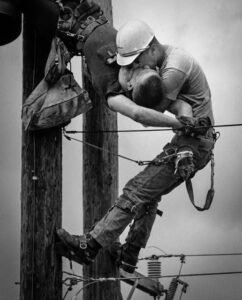
  • The Kiss of Life How One Mans Courage Saved a Colleague and Created a Timeless Photograph

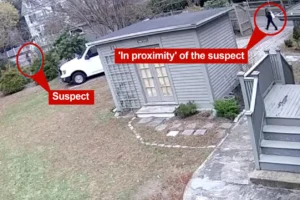
  • Homeless hero who cracked Brown University and MIT shootings being ‘taken care of’ by feds

  • NASCAR Community Mourns Greg Biffle, Remembered as Champion, Humanitarian & Family Man

  • Unconfirmed Reports Circulate Regarding an Aviation Incident Involving the Name Greg Biffle