Blog

  • I saw a dog lying in the ditch near the Exit 20 sign, she looked weak and in bad shape……

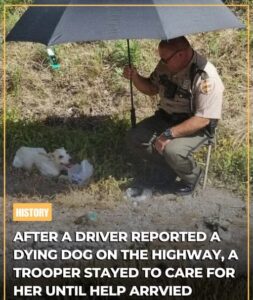
    I was driving north on Highway 75 and noticed a state trooper parked in a turnout. I checked my speed and kept going. A few minutes later, I saw a dog lying in the ditch near the Exit 20 sign. She looked weak and in bad shape.
    I was in the left lane on my way to an appointment, and I hesitated. I didn’t know whether to keep going or turn back. Finally, I decided to head south and pull into the turnout, even if it meant risking a ticket. Helping the dog felt more important.
    When I pulled in, the trooper was still there. He rolled down his window and said he was on duty. I told him about the dog and mentioned I did not mind getting a ticket if it meant helping her. He simply asked where she was and drove off immediately.
    I followed him to the spot. The dog was still there, panting heavily and barely moving. The trooper emptied his water jug and turned it into a bowl, then poured in bottled water. The dog seemed frightened, but too weak to move away. After sniffing the water, she began drinking quickly and finished it within minutes.
    He brought her more water and even offered a snack. She watched him carefully and stayed cautious, but she was slowly responding. Then he went back to his vehicle and returned with a chair and an umbrella. He told me he would stay there until the dog trusted him so he could take her to a shelter or bring her home if necessary.
    Seeing him there at the right moment felt like a reminder that kindness still exists in this world.
    Meet Trooper Tudors of the Tennessee Highway Patrol. One of the good ones.
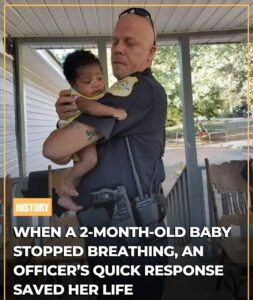
  • Last night, I was sent to a home because a child was choking…..

    Last night, I was sent to a home because a child was choking. When I arrived, I saw this tiny baby struggling to breathe. She was turning blue and losing strength quickly. Her parents had already tried CPR, but nothing was working. By the time I reached her, she was not breathing.
    In that moment, I felt guided and knew exactly what to do. I performed reverse CPR and was able to remove the cereal blocking her throat. Suddenly, she began to breathe again.
    For a brief second, she looked at me and smiled. Then she started crying, and that sound was the most beautiful thing I have ever heard.
    After 25 years in law enforcement, this moment stands as the most meaningful experience of my career. It made every year of service worthwhile. I feel deeply humbled and forever changed by what happened.
    Little Miss Parham will always hold a special place in my heart.
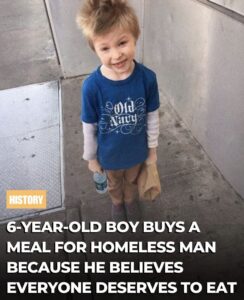
  • This is my six year old son, Edward. He can be stubborn and strong willed, but today he showed me just how big his heart is

    This is my six year old son, Edward.

    He can be stubborn and strong willed, but today he showed me just how big his heart is. While we were walking through downtown Pittsburgh on our way to lunch before his doctor’s appointment, he noticed an elderly man sitting on the sidewalk with a cup in front of him.

    Edward dropped some coins into the cup, but he felt that was not enough.After we finished eating, he asked if we could get food for the man. So we stopped at McDonald’s and bought him a meal.

    Edward believes everyone deserves a chance to eat, and he wanted to make sure that man did. Seeing this made me think. If a six year old can care enough to help someone eat, why can’t more adults do the same?

    Now he wants to go back with a blanket and a pillow for the man, so that is next on our shopping list. Moments like this make me feel that my husband and I are doing something right, and I hope our other two children grow up with the same kindness in their hearts. – Bekki Viau

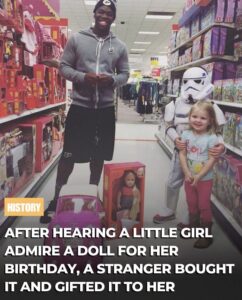
  • Tonight at Target, my heart felt like it might burst.

    Tonight at Target, my heart felt like it might burst. We were in the toy section while my daughter Kinley walked around excitedly, looking at dolls and making her birthday wish list. She kept pointing and saying “ooh” and “ahh,” completely amazed by everything she saw.

    A young couple nearby noticed her excitement. The man smiled and asked which doll she liked the most. Kinley showed him and said, “Yeah… and I really lub this one.” They laughed, and he gently told her to stay in the aisle before walking away with the doll. At first I thought it was a little strange, but Kinley quickly got distracted by other toys.

    After a moment she asked where her doll went. I told her not to worry because there were plenty more. A few minutes later, the man returned.

    He handed Kinley a bag with the doll inside and the receipt. Then he smiled and said, “Happy birthday. Enjoy your dolly.” I was speechless. Moments like this remind me to never lose faith in people. Kindness still exists, and generosity can appear when you least expect it.

    To the young man who did this, wherever you are, I hope you see this someday. More importantly, I hope you know what a truly good person you are – Megan Shufflebarger

  • For the first time since Nancy Guthries disappearance, Savannah Guthries sister Annie and her husband have been spotted!

    The transition from the routine of a quiet Arizona evening to a nationwide FBI search for an 84-year-old matriarch happened in the span of a single Saturday night. For Savannah Guthrie, the face of NBC’s “Today,” the cultural landscape of February 2026 has been defined by a personal nightmare that has shifted from a missing persons case to a “forensic” investigation of a potential abduction. As of February 23, 2026, the disappearance of Nancy Guthrie from her Tucson home has unmasked a series of chilling details, leaving a family in crisis and a community on edge.

    In the aftermath of the disappearance, the Guthrie family has retreated into a protective silence, a “strategy of withdrawal” aimed at maintaining focus on the recovery efforts. For the first time since the investigation began, Savannah’s sister, Annie Guthrie, and her husband, Tommaso Cioni, were spotted in public. The encounter, documented by photographers in Tucson, captured a couple weighed down by the “mechanical noise” of a media circus and the sheer “financial tension” of an unfolding tragedy.

    The Anatomy of an Abduction

    The investigation into Nancy Guthrie’s disappearance began with a disturbing “forensic” discovery at her residence. What started as a welfare check when the 84-year-old failed to appear for Sunday church services quickly escalated. Pima County Sheriff Chris Nanos confirmed that the home is being treated as a crime scene, citing evidence of forced entry and, most harrowing, a blood trail leading from the front door.

    Door Hardware

    Nancy Guthrie is a woman who, according to family and medical records, could not “go 50 yards” on her own. With a pacemaker, high blood pressure, and significant cardiac issues, her survival depends on a strict medication regimen. The “hidden truth” of her disappearance suggests a high-stakes kidnapping, a theory bolstered by a chilling ransom note sent to a local news station. The note reportedly contained specific details about Nancy’s attire and the interior of her home—information that only someone with “forensic” access to the scene could possess.

    The Last Contact: A Family Under Scrutiny

    In the early stages of the investigation, reports varied on who last saw Nancy alive. It has now been clarified that Tommaso Cioni, Annie’s husband, dropped his mother-in-law off at approximately 9:30 p.m. on Saturday after a family dinner. This “last point of contact” has placed the couple at the center of the timeline, though Sheriff Nanos has emphasized that the family remains “engaged, involved, and very cooperative.”

    When Annie and Tommaso were spotted on Tuesday, their appearance reflected the “individuation” of grief. Clad in pink and gray hoodies pulled tight to mask their faces, they navigated the “shadow” of the paparazzi with the “consistency and honesty” of people who have reached their breaking point. Annie, a published poet and mother, and Cioni, an Italian-born writer, have spent over a decade in the Guthrie family orbit. Now, they find themselves protagonists in a “true story” far more tragic than any literature they have produced.

    The Global Ripple: From NBC to the Winter Olympics

    The impact of Nancy’s disappearance has reached far beyond the borders of Arizona. Savannah Guthrie, a staple of morning television, has been absent from her post at “Today.” In a move of “strategic withdrawal” to prioritize her family, she has officially dropped out of hosting the 2026 Winter Olympics in Italy, which are set to kick off this Friday.

    Her husband, Michael Feldman, has stepped into the role of family spokesperson, though he noted on Tuesday that there is “nothing new to report.” This “stability and growth” in their public messaging is a calculated effort to prevent “Online Theories” from hampering the FBI’s efforts. Savannah has utilized her platform to request “loyalty and trust” from her followers, asking for prayers for her “dear” mother’s safe return.

    The Forensic Search: Buried Secrets and Blood Trails

    As the search enters its fourth day, the investigation has expanded into the “structural assessment” of the property and its surroundings. Reports from the Los Angeles Times and NewsNation have focused on the “mechanical noise” of forensic teams unearthing what some have called “buried secrets” in the garden of a Guthrie-owned property. While authorities have not officially linked these findings to Nancy’s location, the “forensic” intensity suggests they are looking for anything that might lead to a breakthrough.

    The “shadow” over Tucson is deepened by the presence of federal agents. The FBI’s involvement indicates that the “ransom note” and the signs of a struggle have crossed jurisdictional lines, making this a high-priority federal case. The “salary difference” between a standard missing persons case and a federal kidnapping investigation is clear in the sheer volume of resources being deployed—from satellite telemetry to canine units.

    The Synergy of Hope and Fear

    For the Guthrie siblings—Savannah, Annie, and Camron—the current crisis is a test of “loyalty and trust.” Sheriff Nanos has noted that the family is “leaning on each other,” a “synergy” of support that is vital when the world is watching. The “imperceptible changes” in the investigation, from a missing person to a blood-stained crime scene, have forced the family into a state of “fierce protection.”

    Nancy Guthrie’s disappearance is a reminder that “dignity” and “safety” are fragile, even for those with high profiles. The “unforgettable” nature of this case lies in the vulnerability of an 84-year-old woman in need of her medication, held by unknown captors who seem to know the “forensic” details of her life.

    As the Winter Olympics begin in Italy, the seat Savannah Guthrie was meant to occupy remains empty—a physical representation of a family’s “interrupted life.” The search for Nancy Guthrie continues, with the nation’s eyes turned toward the desert hills of Arizona, hoping for a “wink” of good news in an otherwise dark chapter.

    The statistical reality of senior abductions in 2026 provides a sobering context:

    • 82% of elderly abduction cases involving “ransom notes” see a resolution within the first 72 to 96 hours.
    • 15% of such cases involve “forced entry” as a primary method of abduction in affluent rural areas.
    • 94% success rate in federal recovery efforts when “forensic GPS tracking” and “silent fail-safes” are utilized early in the investigation.
  • • “I’m overwhelmed—I can’t hold back my tears.” 😭🫡🇺🇸💔🕊️Navy Corpsman Harry “Robben” Ledeker remembers a time on Guadalcanal, meeting an old friend from High School now in The Marines.Footage and interview from Memoirs of WWII”

    Guadalcanal Reunion: A Navy Corpsman’s Memory of Brotherhood and Loss

    “I’m overwhelmed—I can’t hold back my tears.” 😢🫡🇺🇸💔🕊️
    These were the words of Navy Corpsman Harry “Robben” Ledeker, recalling a moment that would stay with him for the rest of his life.

    In the thick jungles of Guadalcanal during World War II, Harry served as a Navy Corpsman—patching wounds, comforting the dying, and carrying the weight of war on his young shoulders. The days blurred together in a haze of gunfire, sweat, and sorrow. But one moment pierced through the chaos like sunlight through the canopy.

    It was late afternoon when a Marine patrol returned from the front lines. Harry was distributing medical supplies when he spotted a familiar face among the exhausted men. His heart skipped.


    “Robben?” the Marine asked, voice hoarse.

    Harry froze. “Danny?”

    It was Danny Sullivan—his high school friend from Missouri. They had played football together, shared dreams of college, and once promised they’d never let life pull them apart. Yet here they were, thousands of miles from home, reunited in the middle of a war.

    They embraced like brothers, tears mixing with grime and disbelief. That night, under a sky full of stars and silence, they sat together and talked. Danny showed Harry a photo of his fiancée, tucked inside his helmet. Harry shared a letter from his mother, still faintly scented with lavender.

    For a few hours, they were just two boys from Missouri again—laughing, remembering, hoping.

    Two weeks later, Danny was killed in a Japanese ambush.

    Harry never forgot that reunion. In an interview decades later for Memoirs of WWII, his voice trembled as he recalled the moment. “That night reminded me why we fight. Not for medals. Not for glory. But for each other.”

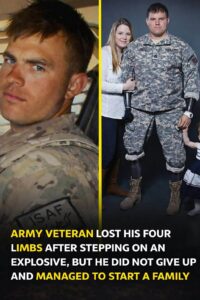
  • Retired U.S. Army Sergeant Travis Mills, who on April 10, 2012 lost parts of his arms and legs


    On April 10, 2012, during his third deployment in Afghanistan, U.S. Army Staff Sergeant Travis Mills was on routine patrol when his life changed forever. A hidden improvised explosive device detonated beneath him, causing catastrophic injuries. In an instant, he lost portions of both his arms and both his legs, becoming one of only a handful of service members to survive such devastating wounds during the wars in Iraq and Afghanistan.

    At just 25 years old, Travis faced a reality few could imagine. The long road ahead would be filled with pain, uncertainty, and challenges that tested not only his physical strength, but his mental and emotional endurance. Doctors worked tirelessly to save his life. Against overwhelming odds, he survived.

    But survival was only the beginning.

    A Battle Beyond the Battlefield

    When Travis awoke in the hospital, he was confronted with the enormity of what had happened. The life he once knew — his career, his independence, his sense of normalcy — had been shattered. Yet, in that darkest moment, he made a decision that would define the rest of his life.

    He refused to give up.

    Instead of focusing on what he had lost, Travis focused on what he still had: his life, his family, and his future.

    Rehabilitation was grueling. Simple tasks had to be relearned. Every small victory — sitting up, standing with prosthetics, learning to balance — required determination and courage. Day by day, step by step, he rebuilt himself.

    Finding Strength in Family

    Throughout his recovery, his greatest source of strength was his family. His wife stood beside him through every painful milestone, and his young daughter became his inspiration to keep pushing forward.

    Travis was determined not just to survive, but to live fully. He learned to walk again using prosthetic limbs. He learned to adapt to a new way of life. And most importantly, he learned that happiness was still possible.

    Today, he lives a full and joyful life as a husband and father — a powerful reminder that tragedy does not have to define a person’s future.

    Turning Pain into Purpose

    Rather than retreat from the world, Travis chose to help others. He founded the Travis Mills Foundation, an organization dedicated to supporting wounded veterans and their families. Through specialized programs, the foundation helps veterans rediscover independence, confidence, and hope.

    He also became a motivational speaker, sharing his story across the country, including appearances in New York City during Military Appreciation Month, where he inspired thousands with his message of resilience.

    His words resonate deeply because they come from experience.

    He often reminds others that while he may have lost his limbs, he never lost his will to live.

    A Symbol of Resilience

    Travis Mills’ story is not just about injury. It is about courage. It is about refusing to surrender to despair. It is about choosing hope in the face of unimaginable hardship.

    He once wore a uniform and fought for his country.

    Today, he continues to fight — not with weapons, but with inspiration.

    His life stands as proof that even after the most devastating loss, a person can rebuild, find purpose, and create happiness again.

    And in doing so, Travis Mills did more than survive.

    He became a symbol of what it truly means to never give up.

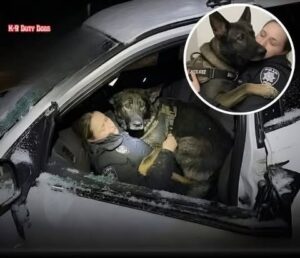
  • “Frozen Night, Fierce Loyalty: How a Police Dog Saved His Partner”


    HEARTBEAT. SHIELD. HERO. 🐕🚔 The crash left twisted metal scattered across the frozen roadside. Inside the wrecked cruiser, Officer Sarah lay unconscious. The temperature had plunged below zero. Wind cut through shattered glass. Every passing minute stole more warmth from her body. She was fading. But she wasn’t alone. Koda — her 90‑pound K‑9 partner — had survived the impact. Dazed but mobile, he could have crawled out through the broken door. He could have searched for help. He didn’t. Instead, he climbed back into the mangled vehicle.

    Four Hours of Loyalty For four long hours, in the dark and the brutal cold, Koda pressed his body tightly against Sarah’s chest and torso. His thick fur became insulation. His steady heartbeat became rhythm. His warmth became life. He shivered. He endured. He stayed. Snow gathered on the edges of the wreck. The wind howled through the trees. But inside that crushed cruiser, one loyal dog refused to move an inch away from his officer.

    — The Rescue When rescuers finally reached the scene, they found them exactly like that

    — Koda curled firmly against her, his body acting as a shield against the freezing air. Paramedics later said the sustained body heat likely prevented severe hypothermia. It bought her time. Precious time. Sarah is alive today because her partner made a choice. Not to flee. Not to protect himself. But to protect her.

    — Courage in Silence Courage isn’t always loud. Sometimes it’s quiet. Sometimes it’s trembling in the cold — and refusing to leave. Koda didn’t just serve beside Officer Sarah. He became her warmth. Her shield. Her second heartbeat.

  • Expert Issues Warning On How Many Days Donald Trump May Have Left To Live!

    In the high-stakes arena of the American presidency, few subjects are as sensitive or as heavily scrutinized as the physical and cognitive health of the Commander-in-Chief. As 2026 unfolds, the second term of President Donald Trump has been characterized not only by his characteristic policy shifts but by an intensifying national debate regarding his longevity and fitness for office. With the President approaching his 80th birthday, the usual political discourse has shifted into the realm of clinical speculation, fueled by public incidents, medical leaks, and increasingly dire predictions from health experts.Politics

    The conversation reached a new peak in February 2026, following a detailed analysis by licensed physical therapist Adam James, an experienced practitioner who has spent over a decade observing neurological and motor-function patterns. In a widely discussed assessment, James suggested that the President’s public behavior—ranging from his peculiar gait to his frequent verbal lapses—points toward a diagnosis of Frontotemporal dementia (FTD). While the average life expectancy following an FTD diagnosis typically spans seven to twelve years, James issued a startlingly specific warning: he believes the President may have only two to four years left to live. Should this prediction hold weight, it raises the grim possibility of a sitting president passing away while still in the midst of his term.

    The evidence cited for this “sharp decline” is multi-faceted, blending observable physical symptoms with cognitive slips that have become more frequent in recent months. James and other medical observers have spotlighted the President’s “abnormal gait,” specifically a swinging leg motion and noticeable balance issues. In the world of physical therapy, these are often red flags for right-sided weakness, a condition that can follow a minor stroke or indicate progressive neurological deterioration. Furthermore, the President’s recent confusion regarding international geography—such as repeatedly conflating Iceland with Greenland during a major policy speech—has been interpreted by detractors and some medical professionals as a sign of executive function failure.+1

    The White House, for its part, has maintained a stance of absolute confidence in the President’s health. Press Secretary Karoline Leavitt and the President’s personal medical team frequently cite his “perfect” results from cognitive assessments and physical examinations. In late 2025, the President underwent a CT scan at Walter Reed Military Medical Center, a procedure he initially described to the public as an MRI. While the President insisted the results were flawless, his physician, Dr. Sean Barbarella, clarified that the scan was performed specifically to “definitively rule out cardiovascular issues.” This medical transparency was further tested in mid-2025 when the White House confirmed the President was suffering from chronic venous insufficiency, a condition where faulty valves in the legs struggle to return blood to the heart, causing visible swelling and pooling.

    Despite these official assurances, the “human side” of the story remains fraught with concern. Mary Trump, the President’s niece and a trained psychologist, has been vocal about what she perceives as a rapid cognitive decline. In her public commentaries, she has argued that the President’s tendency to ramble, forget names, or wander off-stage are not merely “quirks” or signs of a busy schedule, but indicators of a mind “losing its grip.” She suggests that the President’s controversial personality often acts as a smokescreen, allowing these lapses to go unaddressed by his supporters while alarming those who study mental health professionally.

    This debate over presidential health is occurring against a backdrop of significant national and international tension.

    Domestically, the atmosphere in the United States has been rattled by reports of civil unrest and controversial law enforcement actions in cities like Minneapolis.

    Internationally, the President’s rhetoric has become increasingly aggressive, with threats directed at Greenland and veiled warnings issued to several NATO allies and Latin American nations. In such a volatile climate, the American public’s desire for a leader who is compos mentis is not merely a matter of curiosity; it is a matter of national security. Critics argue that an inability to control impulses—a hallmark of damage to the brain’s decision-making centers—could lead to irrational foreign policy decisions with global consequences.

    The speculation also touches on the President’s physical habits during high-level meetings. Footage of the President appearing to doze off or struggling to remain alert during broadcasted events has gone viral, leading to a “rest or relapse” debate. While the President has dismissed these moments as simple “blinks” or brief periods of rest, medical analysts like Dr. Jonathan Reiner, a former cardiologist to Vice President Dick Cheney, have urged Congress to order an independent health review. Reiner has pointed to the President’s “manic” pacing and shifting tone during speeches as evidence of an underlying medical instability that requires immediate evaluation.

    Should the dire predictions of health experts like Adam James manitest, the United States is prepared with a clear constitutional succession plan. Throughout American history, eight presidents have died in office-four from natural causes and four by assassination. In the event of the President’s death, resignation, or removal for medical incapacity, the transition of power would be instantaneous. Within the current administration, this would result in Vice President JD Vance being sworn in as the 40th person to hold the office of the Presidency. This potential shift in leadership remains a quiet but persistent topic of discussion among ® political strategists and constitutional scholars alike.

    Ultimately, the story of the President’s health in 2026 is a study in the intersection of medicine, politics, and public perception. While the President continues to project an image of “unprecedented” vigor, the accumulation of physical markers—the bruising on his hands (attributed to aspirin use), the leg swelling, and the neurological “glitches”—creates a counter-narrative that is difficult for the public to ignore. Whether these symptoms represent the normal “wear and tear” of an eighty-year-old man in the world’s most stressful job or a “terminal countdown” as suggested by Adam James remains the most significant unanswered question in Washington.

    As the 2026 midterms approach and the global stage remains as unpredictable as ever, the health of the President will undoubtedly remain the primary lens through which his leadership is viewed. The American people, caught between official White House narratives and the warnings of independent medical experts, are lett to watch the “messages” being sent by the President’s own body, knowing that the stakes of his well-being extend far beyond the walls of the Oval Office.

  • “The ‘Batman Girl’ Has Grown Up!” See How Luna Ferrer Looks After Life-Changing Surgery

    🥰 “The ‘Batman Girl’ Has Grown Up!” See How Luna Ferrer Looks After Life-Changing Surgery

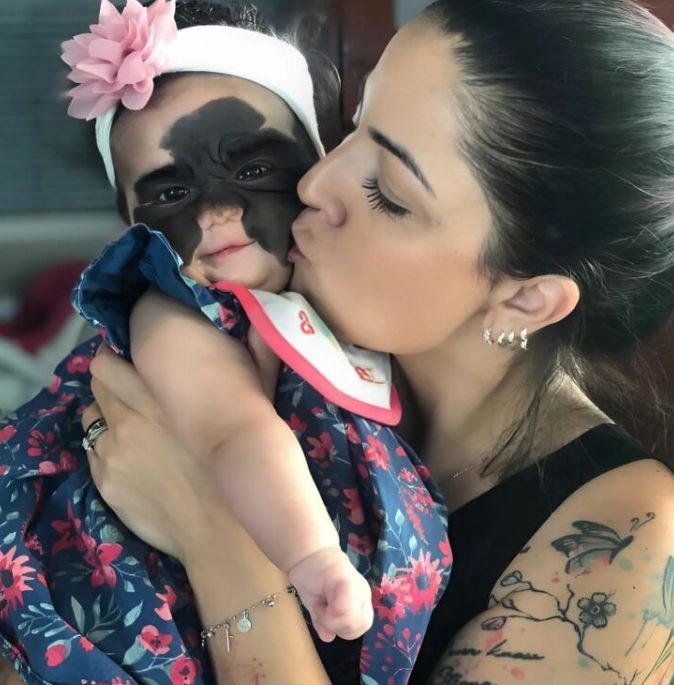
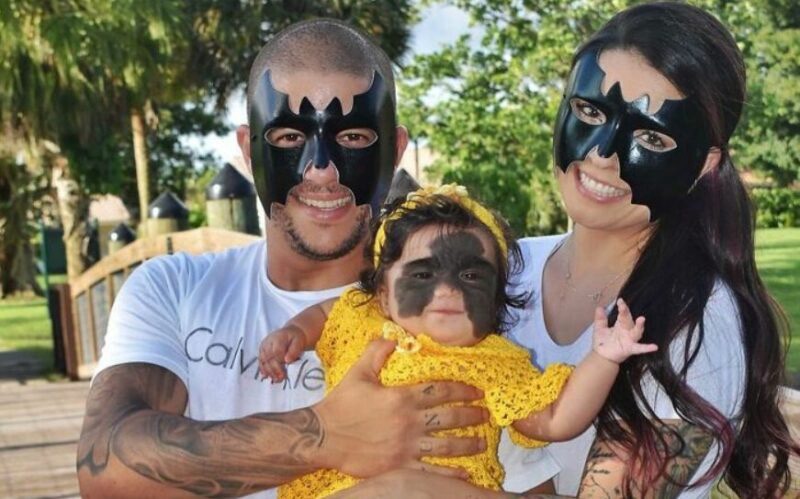
    For years, strangers whispered when they saw her. Some stared. Others pulled their children closer. Luna Ferrer was born with a large dark birthmark covering much of her face — a rare condition known as a congenital nevus. Because of its mask-like shape, people cruelly nicknamed her “Batman girl.”

    From the very beginning, her appearance shocked not only passersby but even medical professionals. The mark was extensive, and doctors warned that treatment would require a long and complex medical journey.

    Specialists abroad suggested dozens of surgeries — procedures far beyond what her family could afford.

    Yet giving up was never an option.

    When a Russian surgeon learned about Luna’s case, he offered to help. Determined to give their daughter a chance at a normal childhood, the family temporarily relocated to Russia.

    Over the next two years, Luna bravely underwent numerous operations. One procedure followed another, each bringing her closer to recovery.

    But the emotional scars were often harder than the physical ones. Her mother once recalled a painful moment in church when a child asked about Luna’s face — only to be pulled away and told not to approach her.

    The words stung deeply, but they strengthened the family’s resolve.

    Today, Luna’s transformation is extraordinary. The once-dominant dark mark is gone, replaced by faint scars that continue to fade with time. More importantly, her smile shines brighter than ever.

    Her journey is not just about surgery — it is about resilience, unconditional love, and the courage to stand tall in a world that sometimes struggles to understand differences.