Blog

  • Our need for comfort, connection, and love, especially at the end of life

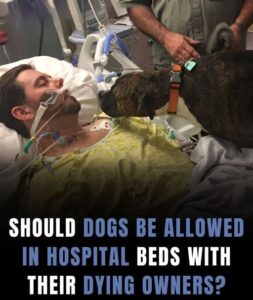
    The image of a dog gently nuzzling its owner in a hospital bed speaks to something deeply human—our need for comfort, connection, and love, especially at the end of life. In moments where words fall short and medical interventions reach their limits, the quiet presence of a loyal companion can carry profound emotional weight. It raises an important and sensitive question: should dogs be allowed to be with their dying owners in hospital settings?

    For many people, dogs are far more than pets. They are companions through life’s highs and lows, silent witnesses to personal struggles, and constant sources of unconditional love. When someone is facing their final moments, it’s natural to want that same comfort close by. The presence of a beloved dog can bring a sense of calm that even the most attentive medical care cannot fully replicate. Studies have shown that interaction with animals can reduce stress, lower blood pressure, and release hormones associated with happiness and bonding. In the context of end-of-life care, these effects are not just beneficial—they can be deeply meaningful.

    Beyond the physical impact, there is also an emotional and psychological dimension. Facing death often brings fear, loneliness, and uncertainty. A dog’s presence can ground a person, offering familiarity in an unfamiliar environment filled with machines, procedures, and constant clinical activity. For some patients, especially those who may struggle to express their emotions verbally, the connection with their pet becomes a powerful form of communication—one that doesn’t require explanation or effort.

    Families, too, can find comfort in these moments. Watching a loved one experience peace, even briefly, can ease the emotional burden of saying goodbye. It can transform an otherwise clinical and sterile environment into something warmer, more personal, and more humane. In a way, it restores a piece of normal life in a place where normalcy often feels lost.

    However, hospitals are complex environments where safety and regulation are critical. Infection control is a primary concern, particularly in intensive care units or among patients with weakened immune systems. There are also considerations related to allergies, hygiene, and the well-being of other patients who may share the space. Not every dog is suited for such environments—some may become anxious, unpredictable, or overwhelmed by the unfamiliar sights and sounds.

    This is why many healthcare institutions approach the issue with caution rather than outright refusal. Some hospitals have established protocols that allow pet visits under controlled conditions. These may include requirements such as proof of vaccinations, grooming standards, behavioral assessments, and supervision during the visit. Often, visits are limited in duration and restricted to certain areas to minimize risk.

    The idea is not to deny comfort, but to provide it responsibly. With proper planning and guidelines, it is possible to create a balance where compassion and safety coexist. In fact, some palliative care and hospice programs actively encourage these visits, recognizing the unique role animals can play in emotional healing and closure.

    At its core, this conversation reflects a broader shift in how we think about healthcare. It’s no longer just about treating illness—it’s about caring for the whole person. That includes emotional needs, personal relationships, and the things that give life meaning. For many, a dog is part of that meaning.

    Allowing a dying patient to spend time with their pet is not simply a policy decision—it’s a recognition of the human experience. It acknowledges that comfort doesn’t always come from medicine, and that sometimes, the most powerful form of care is presence. A warm nuzzle, a familiar scent, the quiet companionship of a loyal friend—these are small things, but in the final moments of life, they can mean everything.

  • FUNERAL OF NAVY VETERAN WITH NO KNOWN FAMILY DRAWS 150+ STRANGERS AFTER PUBLIC CALL FOR ATTENDANCE

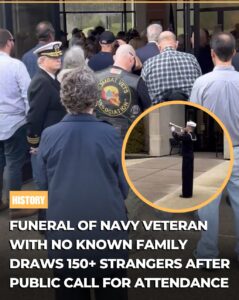
    On March 10, 2026, the funeral of U.S. Navy veteran Lonnie D. Wayman was held in Nashville, Tennessee. Wayman, 74, had passed away on February 21, 2026, while receiving hospice care. At the time his funeral was arranged, there was no next of kin identified, and the service was expected to take place without anyone in attendance. Notices were shared publicly asking if anyone would be willing to attend so that he would not be laid to rest alone. The message spread quickly through social media and local community groups, reaching people far beyond his immediate circle.

    On the day of the service, the situation was completely different from what had been expected. Between 150 and 200 people arrived at the cemetery. The crowd included military veterans, motorcycle groups, law enforcement officers, and local residents who had never met him but chose to be there. The ceremony was conducted with full military honors. The American flag was folded and presented, and a dove release was included during the service. What had been planned as a quiet funeral with no attendees became a gathering filled with presence and respect. A man who was expected to be buried alone was instead honored by a community that showed up after hearing his story.

  • Photo of Trump walking toward Marine One turns heads after people spot detail

    Viral images of Donald Trump boarding Marine One — first published in 2025 — are once again making the rounds online.

    And it’s one detail that continues to capture people’s attention.

    We are in 2026, and new rumors about President Trump’s health continue to circulate.

    For example, a rumor began spreading on April 4 that the 79-year-old president had been taken to Walter Reed Medical Center. After a few hours of uncertainty, the White House denied the report.

    Trump himself states that he is in excellent shape. Yet, the 79-year-old became the oldest person to take the oath of office when he was sworn in as president last year and has been sensitive to questions about his health, especially as he has repeatedly questioned his predecessor Joe Biden’s fitness for office.

    But people who choose to believe Trump’s assurances that he is fit and full of energy to lead a global superpower feel vindicated, often pointing to photos from last year.

    The images show Donald Trump walking across the White House South Lawn before stepping onto Marine One, with many social media users concentrating less on the political moment and more on what they believe is a noticeably slimmer frame and a looser-fitting suit.

    “Looking healthier” vs. “cause for concern”

    As the 2025 Marine One photos spread again, reactions on the internet quickly split into two narratives.

    Supporters celebrated what they described as a healthier, more energetic look, with some claiming Trump appeared to be “aging in reverse” and attributing the change to lifestyle adjustments.


    Photo Credit: Bo Loudon/X


    Other people urged caution, pointing out that noticeable weight changes in older adults can sometimes trigger unnecessary speculation without clear medical context. That tension — between admiration and concern — has become a recurring theme whenever new or resurfaced images of Trump circulate on the social media.

    Diet talk, rumors, and viral theories

    As with many high-profile political figures, the discussion has also been shaped by rumor and internet speculation. Some users have pointed to possible dietary changes, while others have loosely speculated about weight-loss medications — claims that remain unverified and entirely based on online commentary.

    Trump himself has previously spoken publicly about adjusting his eating habits over time, and First Lady Melania Trump has often been mentioned in media narratives as influencing a more disciplined approach to meals and lifestyle in the White House and beyond.

    Photo Credit: Bo Loudon/X

    At the same time, Donald Trump’s affinity for fast food has become almost legendary. He has been photographed aboard his private jet, Trump Force One, enjoying a bucket of KFC. Social media posts have also shown him eating McDonald’s burgers and fries.

    As per former campaign advisers Corey Lewandowski and David Bossie, the former president’s private plane was stocked with what they described as “the four major food groups”: McDonald’s, Kentucky Fried Chicken, pizza, and Diet Coke.

    The New York Times once reported that Trump consumed up to 12 cans of Diet Coke a day — so much so that he reportedly had a button on his desk in the White House to summon a fresh can whenever he wanted.

    A familiar pattern: images that won’t fade

    What makes the Marine One photos, originally published by MAGA supporter Bo Loudon, particularly enduring is how often they resurface during periods of renewed attention on Trump’s public schedule or health-related discussions.

    Conservative Facebook pages often frequently repost the images and each time they resurface, they tend to be reframed through the lens of current events — whether that’s a recent appearance, a political development, or broader speculation about his well-being.

    🚨BREAKING: This video of President Trump is going viral due to amount of weight he appears to have lost and his youthful appearance.

    78 is the new 28.

    In that sense, the images have taken on a life of their own, functioning less as a snapshot of a single day in 2025 and more as a recurring reference point in the ongoing public fascination with Trump’s physical presence and stamina.

    Looking at these images, opinions remain deeply divided. Some people see a visibly energetic and healthier Donald Trump, while other people think they raise questions about his overall condition. So where does the truth lie—has he become more health-conscious over time, or is there any substance to the ongoing rumors that he may not be in perfect health?

    The debate continues, and as always with Trump, every new photo only adds more fuel to the conversation.

  • American refueling plane crashes in Iraq with crew of at least 5; casualties unclear, officials say

    An American military refueling plane taking part in the operation against Iran crashed in Iraq and rescue efforts were underway, U.S. Central Command said Thursday.

    It was not immediately clear if there were any casualties. A U.S. official, who spoke to The Associated Press on condition of anonymity to discuss the developing situation, said the KC-135 aircraft that crashed had at least five crew members aboard.

    The crash was not due to hostile fire or friendly fire, the military said in a statement, which described the plane as “a loss.”

    FILE -- Generic image of KC-135.
    FILE — Generic image of KC-135.(U.S. Department of Defense)

    U.S. Central Command, which oversees the Middle East, said that two aircraft were involved and that one landed safely and the other went down in western Iraq.

    A second U.S. official, who similarly spoke on condition of anonymity, said the other plane involved also was a KC-135 tanker.

    “More information will be made available as the situation develops,” Central Command said. “We ask for continued patience to gather additional details and provide clarity for the families of service members.”

    The tanker is the fourth publicly acknowledged aircraft to crash as part of the U.S. military’s operations against Iran. Last week, three American fighter jets were mistakenly downed by friendly Kuwaiti fire.

    All six crew members safely ejected from the F-15E Strike Eagles and were in stable condition after being recovered, the U.S. said.

    Seven American troops have been killed in combat during the Iran war so far, while about 140 U.S. service members have been injured, including eight severely, the Pentagon said earlier this week.

    Both President Donald Trump and Defense Secretary Pete Hegseth have warned that the Iran war would likely claim more American lives before it ends.

    Six of the fallen service members were killed when an Iranian drone struck an operations center at a civilian port in Kuwait. They were in the Army Reserve and worked in logistics, keeping troops supplied with food and equipment.

    They died one day after the U.S. and Israel launched the military campaign against Iran on Feb. 28. The Islamic Republic has retaliated with missiles and drones against Israel and several Gulf Arab states that host U.S. armed forces.

    The seventh American service member died after being wounded during a March 1 attack on the Prince Sultan Air Base, Saudi Arabia.

    Trump joined grieving families for a dignified transfer at Dover Air Force Base when the remains of the first six soldiers were returned to the United States. Vice President JD Vance, Hegseth and others saluted the seventh flag-draped transfer case as it arrived this week at Dover.

    The KC-135 tanker involved in the latest crash is based on the same design as the Boeing 707 airliner and entered military service more than 60 years ago. Like other long-serving aircraft, the planes have undergone various retrofits and upgrades over the years.


    The KC-135 tankers typically have a crew of three. It’s not immediately clear what role the extra crew members were serving aboard the flight.

    According to a report from the Congressional Research Service, the Air Force last year had a total of 376 KC-135s, including 151 on active duty, 163 in the Air National Guard and 62 in the Air Force Reserve.

  • The last emotional words of a young American soldier killed during the ongoing war between US-Israel vs Iran has emerged.

    A 20-year-old American Army has lost his life in the ongoing US-Israel and Iran war.

    He has been remembered as a devoted son and dedicated soldier after he was killed in an Iranian strike in Kuwait, just hours after reassuring his family that he was safe.

    Declan Coady, from West Des Moines, Iowa, died on Sunday, March 1, during a drone attack at Shuaiba Port in Kuwait. He had been serving with the 103rd Sustainment Command, a Des Moines-based unit.

    The strike came amid escalating hostilities following joint US-Israeli military operations against Iran. American officials confirmed that six US service members have so far been killed in the conflict.

    The Pentagon identified three other soldiers who died in the same attack as Capt. Cody A. Khork, 35, of Florida; Sgt. 1st Class Noah L. Tietjens, 42, of Nebraska; and Sgt. 1st Class Nicole M. Amor, 39, of Minnesota. Coady was posthumously promoted from specialist to sergeant.

    Coady’s father, Andrew, said he last spoke to his son on Saturday, February 29, the day before the attack.

    “He was telling us that he was safe,” he said.

    According to the family, the young soldier had been providing frequent updates as tensions in the region intensified. He last spoke to his older brother, Aidan, 25, an Army corporal based in Italy.

    Their father believes the strike may have occurred shortly after that final call.

    “But we had a feeling based off the limited timeframe, we feel shortly after he got off the phone with his brother, that this incident happened,” he said.

    Coady’s sister, Keira, 22, described the heartbreak of losing her younger brother.

    “He was my younger brother… I’m just really sad that I didn’t get a chance to tell him I love him one more time,” she said.

    In a statement, Iowa Governor Kim Reynolds paid tribute to the fallen reservist, describing him as “a young Iowan who heroically answered his nation’s call to duty and gave the ultimate sacrifice”.

    She called on residents of the state to keep his family in their prayers.

    Drake

    University

    , where Coady was a second-year student studying information systems, cybersecurity and computer science, said it was “heartbroken” by the news of his death.

    The university noted that he had served in the US Army Reserve since 2023 as an Information Technologies Specialist and said he had “an incredibly bright future ahead of him”.

    Coady enlisted in the Army Reserve while studying at Drake and could have avoided deployment because of his participation in ROTC. However, he chose to deploy to Kuwait in August 2025.

    His father said he had been considering transitioning to active duty after completing his deployment.

    “That’s how much he loved it,” he said.

    Coady would have celebrated his 21st birthday on 5 May.

    A graduate of Valley High School in 2023, Coady was described by his family as kind, modest and quietly determined.

    “He was just the nicest. He was quite shy and a man of few words, but he was amazing,” his sister said.

    His father added: “He was still outgoing in many ways. He was not afraid of doing anything.

    He would always step up and help people . Declan was very good at what he did in the Army.”

    Outside his military service and academic pursuits, he enjoyed gaming, going to the gym, camping and hiking with his family.

    He had also achieved the rank of Eagle Scout, following in the footsteps of his two brothers.

    An online fundraiser set up to support the family described him as “more than a soldier, he was a son, a family member, a friend, and a light in the lives of those who knew him”.

    The Defense Department said the US Army Reserve soldiers were among six service members who died when an Iranian strike hit a tactical operations center in Kuwait.

  • FIREFIGHTER WHO SAVED 2-YEAR-OLD BOY WITH CPR MEETS HIM AGAIN 23 YEARS LATER AS A FATHER!!!

    Around 2000, a house fire broke out while a two-year-old boy named Xavier Lewis was inside.

    By the time firefighters reached him, he had stopped breathing.

    Firefighter Jeff Ohs carried the child out of the burning building and immediately began CPR. After several moments, the effort worked and Xavier’s life was saved.

    Xavier grew up knowing the name of the man who rescued him that day.

    Years passed. He went through school, started adult life, and always remembered the fire and the firefighter who helped him survive.

    The experience eventually influenced an important decision.

    Xavier decided to become a firefighter himself.

    About 23 years after the fire, Xavier had the chance to meet Jeff Ohs again.

    This time the situation was very different.

    Xavier was no longer the child who needed saving. He was an adult and a father.

    During the meeting, Jeff held Xavier’s two-year-old son in his arms.

    The moment connected three generations through one rescue that happened many years earlier.

    Xavier later shared a simple message.

    Without Jeff’s actions during the fire, he would not be alive today.

  • 8 year old stops car to help elderly woman climb stairs and shows simple act of kindness

    In June 2023, 8-year-old Maurice Adams Jr. was riding in the backseat after attending his sister’s high school graduation.

    Outside, he saw an elderly woman struggling to climb a set of stairs with a walker. Each step looked difficult and slow.

    Maurice asked his mother to stop the car. Without hesitation, he stepped out and went to help.

    He placed a hand on her back, steadied the walker, and guided her step by step to the top.

    A nearby driver noticed and recorded the moment. The video later spread online, showing a simple but powerful act of kindness.

    When they reached the top, the woman hugged Maurice and thanked him. Then he returned to the car and continued his day.

    There were no speeches, no planning, no audience. Just a child seeing someone in need and choosing to act.

    That short action left a lasting impression on everyone who watched.

  • Rising Tensions in the Middle East After U.S. and Israeli Airstrikes on Iran: How Operation Epic Fury Triggered Retaliation, Global Alarm, Diplomatic Efforts to Prevent Escalation, Economic Shockwaves, and Growing Fears That the Region Could Be Moving Toward a Much Wider Conflict

    The first explosions did far more than damage concrete structures or military facilities. They shattered the fragile assumption that the long-standing tensions surrounding Iran and its nuclear ambitions could still be contained through diplomacy, negotiations, and strategic restraint. For years, policymakers around the world had warned that the situation in the Middle East rested on a delicate balance. This balance was maintained through a combination of sanctions, diplomatic pressure, deterrence strategies, and cautious military positioning by regional and global powers. Yet when reports emerged that aircraft from the United States and Israel had carried out coordinated airstrikes inside Iranian territory, that balance appeared to collapse almost instantly. News of the operation spread rapidly across international media outlets, dominating headlines and prompting urgent responses from governments worldwide. Analysts and security experts began debating whether this moment represented a limited strike intended to send a strategic message or the opening phase of a much larger confrontation. The sudden escalation also intensified global anxiety about the stability of the Middle East, a region whose geopolitical tensions have repeatedly shaped international security and economic conditions. For many observers, the most troubling aspect of the situation was the speed with which long-simmering rivalries seemed to erupt into direct military confrontation. Within hours, a conflict that had previously unfolded through proxy battles, covert operations, and diplomatic standoffs appeared to move into a far more dangerous stage, raising fears that a broader regional war could become a real possibility.

    According to officials in Washington, D.C. and Tel Aviv, the strikes were part of a coordinated military campaign referred to as Operation Epic Fury. Military leaders described the operation as a preemptive effort designed to weaken key components of Iran’s military infrastructure, particularly facilities believed to be connected to the country’s nuclear development program. Public statements emphasized that intelligence assessments had suggested an urgent need for action, arguing that delaying intervention could have allowed Iran to expand capabilities that might threaten regional security. Supporters of the strikes portrayed the operation as a defensive measure intended to prevent future instability, claiming that the targets were carefully selected to minimize broader damage while neutralizing specific strategic threats. However, critics quickly raised concerns about the potential consequences of such an action. Many warned that direct military strikes against Iranian territory risked provoking a cycle of retaliation that could escalate beyond the control of any single government. This debate highlighted a long-standing divide among international observers about how best to address Iran’s influence in the region. Some policymakers have long advocated decisive action to limit Tehran’s strategic reach, while others argue that diplomatic engagement and multilateral agreements offer a safer path toward long-term stability. Regardless of the differing perspectives, the operation marked one of the most significant direct confrontations involving Iran, the United States, and Israel in recent years, signaling a shift from indirect tensions to open military action.

    As the situation unfolded, images and video footage began circulating across social media platforms and global news broadcasts. These visuals showed damaged facilities, fires burning near military compounds, and smoke rising from sites believed to be associated with Iran’s defense infrastructure. Reports suggested that several strategic locations had been struck, including facilities linked to air-defense systems and other military installations. Iranian state media, however, presented a different narrative, emphasizing claims that many incoming missiles had been intercepted and that the country’s defensive capabilities remained largely intact. Officials in Tehran issued strong condemnations of the strikes, describing them as acts of aggression and promising a response. The language used in official statements suggested that retaliation was not only likely but inevitable. This exchange of narratives reflected the broader information struggle that often accompanies modern warfare. In addition to physical battles fought on the ground or in the air, governments also compete to shape public perception and control the story presented to domestic and international audiences. Military analysts and intelligence agencies around the world began carefully examining available evidence in an effort to determine the true extent of the damage caused by the strikes. While some early reports suggested significant disruption to certain military sites, the full impact remained uncertain as both sides released selective information supporting their own strategic messaging.

    Behind the dramatic headlines and rapidly spreading online footage, diplomatic activity intensified across the international community. Governments throughout Europe urged restraint, calling on all parties involved to avoid further escalation and return to diplomatic dialogue. Leaders emphasized that while security concerns were legitimate, military confrontation carried enormous risks not only for the countries directly involved but also for the broader Middle East region. Neighboring nations in the Persian Gulf quietly increased security measures, strengthening defensive preparations while closely monitoring developments. Regional leaders understood that even a limited conflict could quickly expand if retaliatory strikes triggered additional military responses. International organizations also began discussing emergency diplomatic initiatives aimed at preventing the crisis from spiraling further. Channels of communication that had previously been inactive were suddenly reopened as diplomats attempted to de-escalate the situation through urgent negotiations. Behind closed doors, envoys and foreign ministers worked to deliver messages between governments that might otherwise refuse direct communication. These efforts reflected a long-standing reality of international politics: even during moments of confrontation, diplomacy often continues in parallel, seeking opportunities to slow or contain the conflict before it expands beyond control.

    While political leaders debated strategy and diplomats searched for ways to reduce tensions, global financial markets reacted almost immediately to the unfolding events. Energy traders in particular responded to fears that the conflict could disrupt oil production or threaten shipping routes passing through critical waterways in the Middle East. The region remains one of the world’s most important sources of energy supply, and even the possibility of disruption can create rapid shifts in market behavior. Oil prices experienced sharp fluctuations as analysts attempted to evaluate the likelihood of further escalation and its potential consequences for global energy distribution. Investors also began assessing broader economic risks. Concerns emerged about how an extended conflict might affect international trade routes, supply chains, and financial stability across multiple industries. Governments in major economies monitored the situation carefully, recognizing that geopolitical crises in the Middle East often have far-reaching economic consequences. While the immediate financial impact remained uncertain, the reaction of global markets demonstrated how closely interconnected geopolitical stability and economic systems have become. Events occurring within a single region can quickly influence decisions made by investors, corporations, and policymakers around the world.

    Amid the strategic calculations, military planning, and economic speculation, the human dimension of the crisis remained deeply visible. In cities such as Tehran and Tel Aviv, ordinary people followed the unfolding events with growing anxiety and uncertainty. Families gathered around televisions or refreshed news updates on their phones, trying to understand what the latest developments might mean for their safety and future. Parents listened carefully for warning sirens, while children asked questions that were often difficult to answer. For many residents of the region, the most frightening aspect of the situation was the uncertainty surrounding what might happen next. The explosions that marked the beginning of the confrontation left people wondering whether they represented a limited military exchange or the start of a much larger war. In moments like these, the line between geopolitical strategy and everyday life becomes painfully clear. Decisions made in government offices, military headquarters, and diplomatic meetings can shape the daily experiences of millions of people who simply hope for peace and stability. As the world continued watching events unfold, the greatest hope among many observers was that restraint and dialogue might prevail before the cycle of retaliation expanded into a broader conflict with consequences reaching far beyond the Middle East.

  • 90-year-old Kearns crossing guard celebrates birthday helping kids cross safely

    KEARNS, Utah — A crossing guard in Kearns is proving that age doesn’t have to slow you down. Ray Weber has been helping students safely cross the street for 24 years.

    On Tuesday, he celebrated a major milestone — his 90th birthday — still showing up for the job with the same energy and enthusiasm. “Good morning, you guys! Hello princess!” Weber called out to students as they arrived at West Kearns Elementary on Tuesday morning.

    Many of the children know him by name, including students like 9-year-old Avia Burt. “He helps people and he also is really nice and funny,” Burt, a third grader at West Kearns Elementary said.

    “Sometimes when I’m walking to school, he tells me some jokes and stuff,” she said, admitting most of them are “dad jokes.”

    Weber, who grew up in Park City, took the job after retiring from his 35-year-old career in the printing industry. He said he wanted something that would keep him physically active, so he put on a fluorescent yellow-green vest and picked up a stop sign.

    Watch: Crossing Guard Day


    But it’s the students who keep him coming back. “They’re funny. It’s great interacting with the kids,” Weber said. “They’ll come along and pick up rocks along the sidewalk or the gutter and bring them over to share with us.”

    He even convinced his wife to join him as a crossing guard.

    Despite turning 90, Weber said he doesn’t feel his age. “When I’m just thinking of me and my personality and how I appear to other people, I’m 40 years old,” he said. “That’s the way I look at myself — until I look in the mirror.”

    So what’s his secret to a long life?

    “Stay young, be happy, laugh a lot, have a good time,” Weber said. “Be active, like what you do.”

  • PHOTO OF COAL MINER ATTENDING DAUGHTER’S HOMECOMING AFTER LONG SHIFT SPREADS ACROSS THE INTERNET.

    In 2018, families gathered at Betsy Layne Elementary School in Kentucky for a school homecoming event.

    Parents arrived dressed neatly. Many were ready for photos with their children.

    Then one father walked in looking very different.

    He was a coal miner who had just finished a shift underground.

    There was no time to go home. No time to clean up.

    He arrived wearing his work clothes, with coal dust still on his boots and face.

    Instead of missing the event, he came straight from the mine.

    A photo taken at the school shows the miner standing beside his daughter during the celebration.

    He does not look polished like the other parents.

    But he is there.

    Coal mining shifts are long and exhausting. After hours of physical work, many people would choose to rest or go home first.

    This father made another choice.

    He chose to show up for his daughter.

    When the school shared the photo online, it quickly spread across social media.

    People were not focused on the coal dust.

    They noticed something else.

    A father who finished a difficult day of work and still made sure he was present for his child.

    Sometimes support does not arrive perfectly dressed.

    Sometimes it arrives directly from work.